Reliable Food Safety Services
Your facility needs consistent cleaning schedules tailored to specific risks, processing volumes, food allergens, and inspection schedules, including verifiable documentation confirming HACCP requirements, compliance audits, and health department standards. The information following give details about essential cleaning protocols.
Key Takeaways
- Food safety cleaning professionals from Brampton work with restaurants, grocery departments, commissaries, warehouses, bakeries, schools, mobile vendors, and allergen-sensitive operations.
- Frequently contacted areas, food-contact equipment, kitchens, floors, drains, restrooms, and storage areas are sanitized using area-specific procedures to avoid cross-contamination.
- Checking of approved sanitizer dilution, suitability, and contact time is executed by qualified specialists, with completion filed using tests, audits, and remedial documentation.
- Maintenance timelines should follow risk, production rate, transitions, releases, and guidelines, with regular, periodic, and seasonal activities assigned by location.
- Contractors must have HACCP, health regulatory competency, WHMIS instruction, coverage, references, coded instruments, and compliance-ready hygiene paperwork.
Brampton Venues That Need Food Safety Cleaning: Which Ones?
Any Brampton facility that manages, stores, prepares, packages, or serves food needs sanitation protocols. You must implement it if your business falls under public health inspection, food premises regulations, or internal HACCP-based controls. That requirement covers eateries, dining facilities, food distribution centers, supermarket departments, meat markets, fish counters, corner stores, and commercial kitchens.
Compliant food safety cleaning remains required in warehouses, food manufacturing plants, cold storage sites, retail bakeries, school nutrition programs, banquet halls, and meal delivery hubs. Portable temporary ventures apply similarly, examples being food trucks, event sellers, and temporary stalls. Your venue needs written cleaning standards when your employees handle raw materials, divide prepared dishes, warm meals, or keep allergens stored. In Brampton, hygiene remains not discretionary; it forms part of legal, operational, and consumer protection compliance.
What Do Brampton Cleaning Experts Clean?
Professional cleaning teams specializing in Brampton disinfect high-contact surfaces, food preparation areas, floors, and restrooms in compliance with food safety regulations. Emphasis on these spaces stems from extreme cross-contamination risk, injury hazards, and compliance issues.
When you know their cleaning scope, you can verify that your facility's cleaning scope meets operational and regulatory requirements.
High-Touch Surface Sterilization
set how often each area is sterilized
using one-way workflows, and keeping separate cleaning materials organized by section
Food Prep Areas, Flooring, and Sanitary Facilities
Professional cleaners in Brampton concentrate on kitchens, floors, and restrooms given that each location involves specific contamination control, slip-and-fall, and health code requirements. In industrial kitchens, you need grease removal from cooking stations, appliance surfaces, drain systems, preparation areas, and backsplashes to reduce contamination and pest pressure.
Floor care that is documented should also be anticipated. Technicians clean and remove buildup from tile grout, ceramic surfaces, and vinyl floors, then apply correct drying techniques so you can reduce slip incidents and maintain code-compliant conditions. They also handle entry points where dampness and dirt enter the building.
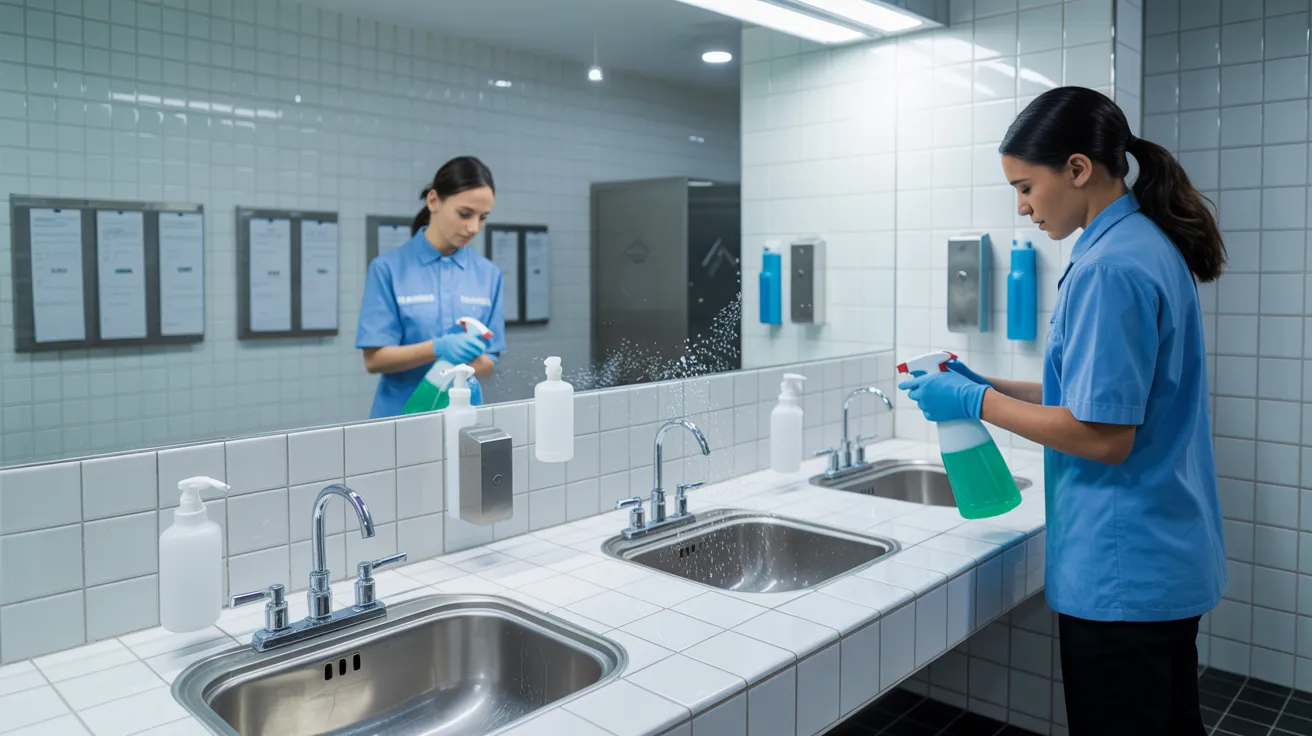
In restrooms, cleaners treat contact surfaces, bathroom hardware, partition walls, accessory dispensers, and receptacles then refill supplies and eliminate odor. They also service restaurant moprooms, where chemical storage, sink hygiene, and drainage conditions can affect sanitation compliance and staff safety daily.
Food Safety Cleaning Significance for Brampton Businesses
In Brampton, you must copyright sanitary cleaning practices to satisfy health code requirements and achieve compliance. You also minimize bacterial spread through proper cleaning of food-preparation surfaces, appliances, and frequently-touched items. Most importantly, you safeguard community wellness by reducing the chance of food poisoning in your establishment.
Sanitary Standards Adherence
Brampton food companies must comply with rigorous sanitary regulations, so hygiene maintenance is critical to adhering to health codes, defending customers, and avoiding penalties. You must maintain hygienic food handling zones, recorded sanitation plans, safe chemical management, and verifiable staff procedures that meet municipal and provincial inspection expectations.
When cleaning standards deteriorate, violations, compliance orders, brand harm, and operational disruption from subsequent audits or regulatory actions become concerns.
Cross-Contamination Avoidance
Following health code standards depends on your ability to prevent cross-contamination in routine food work and sanitation. You must separate raw ingredients from ready-to-eat foods, disinfect work areas after use, and store chemicals away from food-contact items. Clear procedures reduce transfer risks and promote steady regulatory adherence.
You could implement allergen segregation to prevent priority allergens from contacting common areas, containers, or machinery. Use dedicated cutting boards, color-coded tools, and strict utensil labeling so staff don't mix items throughout cooking or delivery. Enforce washing hands following raw meat, seafood, eggs, or allergen-containing products. Swap cleaning rags frequently, and check sanitizer strength with test strips. When employees learn these procedures each shift, you create a cleaner, safer operation that matches Brampton's safety requirements every day.
Community Health Protection
When sanitation efforts weaken, you don't only face inspection setbacks—you expand the chance of foodborne illness affecting customers, staff, and the larger Brampton community. You also weaken your role in safeguarding community wellness, especially in busy food facilities where pathogens travel quickly through surfaces, equipment, and touchpoints.
You depend on sanitation protocols that eliminate contaminants, properly disinfect, and verify results. This involves maintaining exposure times, deploying approved disinfectants, recording schedules, and coaching staff to fulfill health-unit expectations. These actions support disease prevention by reducing microbes before affecting food surfaces or hands. In Brampton, effective cleaning shields vulnerable populations, curtails outbreak likelihood, and proves your diligence. When you adhere to proper protocols, you exceed requirements—you meaningfully lower danger and advance safer food handling across the region.
Why Is Cleaning Essential for Food Safety Compliance?
Maintaining comprehensive cleaning schedules supports food safety compliance by lowering contamination exposure, limiting pathogen development, and keeping your facility compliant with sanitation requirements under HACCP-based programs and public health regulations. You confirm that food-contact surfaces stay visibly clean and microbiologically controlled, enabling documented preventive controls and inspection readiness.
Systematic cleaning further solidifies allergen mitigation by clearing residues that can cause undeclared allergen exposure. When you match validated sanitation procedures with safety training, your staff can follow standardized methods, employ approved chemicals properly, fill out documentation correctly, and manage discrepancies ahead of issues intensify. Regular cleaning promotes supply chain documentation, verifies corrective steps, and shows accountability in audits. It also helps you protect product integrity, preserve operational compliance, and minimize the possibility of compliance actions, product recalls, formal complaints, and avoidable health dangers.
How Ought You Plan Commercial Cleaning Work?
Create cleaning routines based on risk assessment, output volume, and regulatory standards rather than relying solely on a fixed calendar. You should plan regular cleaning daily
risk factors, production capacity, or regulatory standards change
How Do You Choose Brampton Cleaning Experts?
Screen providers initially by their food-safe sanitation requirements—not budget alone. You need to verify that every company meets CFIA, public health, and HACCP standards for your operation. Demand proof of insurance, WHMIS compliance, training records, and management systems. Evaluate technician understanding of contamination dangers, chemical safety, and documented sanitation practices.
You should further examine operational reliability and answerability. Request references from food facilities in Brampton, then review response times, corrective-action procedures, and communication standards. Validate the company facilitates supplier audits and can present inspection-ready documentation to regulators or third parties. Confirm equipment is maintained, color-coded implements are applied correctly, and site-specific hazards are recognized. A qualified provider ensures regulatory compliance, product quality, and your brand reputation.
What's included in a Food Safety Cleaning Plan?
Put together a written plan that clarifies every sanitation task, standard, and responsibility before production begins. You should list cleaning intervals, permitted substances, dilution percentages, exposure times, instruments, and inspection methods for each sector, surface, and equipment. Make sure to include pre-operational inspections, corrective actions, and employee training requirements.
Your plan should also tackle prevention of contamination, waste management, pest-control tactics, and scheduled records for restrooms, drains, floors, and food-contact areas. Specify how you'll separate raw and ready-to-eat processes, facilitate ingredient tracking, and keep accurate allergen labeling through validated cleaning between product changes. You should establish accountability, document signed records, and evaluate results against regulatory standards, HACCP controls, and customer requirements. When gaps appear, modify procedures immediately and instruct staff.
Commonly Asked Questions
Do sanitation providers operate during overnight shifts at Brampton facilities?
Yes, you can arrange sanitation coverage to support nighttime operations in Brampton facilities. You'll coordinate overnight sanitation around operational schedules, access controls, and personnel needs. Services generally outline overnight procedures to minimize interruption, ensure adherence, and record finished work. You professional guide should verify arrival timeframes, supervision, access protocols, and disposal methods before service begins.
Can sanitation professionals handle hazardous incidents?
Yes, you can find many Brampton sanitation experts offering emergency response options. They handle contamination, assess dangers, isolate zones, and execute rapid cleanup to reduce exposure and prevent disruption. You should verify response times, certifications, safety measures, and disposal methods. If your facility must meet standards, choose a service that documents incidents, follows procedures, and supports audits.
Are green disinfectants safe for food-contact surfaces?
In essence, plant-based sanitizers prove safe for surfaces contacting food provided you source items marked food-safe that satisfy regulatory standards. Validate exposure duration, dilution ratios, and rinsing needs in advance of use. Plant-derived products decrease chemical hazards, although you should obtain proof of efficacy against relevant pathogens. To keep residue-free areas, implement exact manufacturer guidelines and validate the disinfectant satisfies food industry regulations.
Do cleaning plans enable seasonal production changes?
Certainly, cleaning schedules adapt to production fluctuations effectively. Adapt intervals, staff levels, chemicals, and verification steps to fit with seasonal workflows while sustaining regulatory adherence. Minimize production downtime via planning sanitization alongside equipment transitions, high demand periods, and usage cycles. Further update procedural documents, training, and environmental testing to account temporary risks, novel allergens, or increased soiling. Periodic assessments keep your strategy efficient.
Are professional cleaning companies providing employee instruction on hygiene protocols?
Absolutely, commercial cleaners regularly deliver employee education on hygiene standards. Your team receives training on correct chemical handling, dwell times, cross-contamination prevention, machine takedown, and paperwork. They typically align instruction with HACCP, GMP, and CFIA or regional health authority standards. Many also perform sanitation audits to verify compliance, pinpoint weaknesses, and strengthen corrective measures. This enables you to sustain consistent procedures, clear audits, and lower contamination dangers routinely.
Summary
Through working with Brampton food safety and commercial cleaning specialists, you do far more than tidy—you ensure your facility for audits and your procedures stay aligned with regulations. From kitchen spaces to processing areas, all maintained surfaces and organized zones help prevent pest problems and avoid major losses. Through booking service at proper intervals and sticking to a solid cleaning plan, you safeguard your team, clients, and your good name. In a tightly controlled regulatory landscape, clean conditions cannot be considered optional—they represent good business practice.